Pixelab
A creator platform built around digital ownership.
A creator platform built around digital ownership.
Project Details
Project Details
Services
Mobile App
Mobile App
Branding
Branding
Creative Strategy
Creative Strategy
Location
Concept Project
Concept Project
Duration
2 months • 2022
2 months • 2022
Team involved
1 Product Designer
1 Frontend Developer
1 Product Designer
1 Frontend Developer
Info
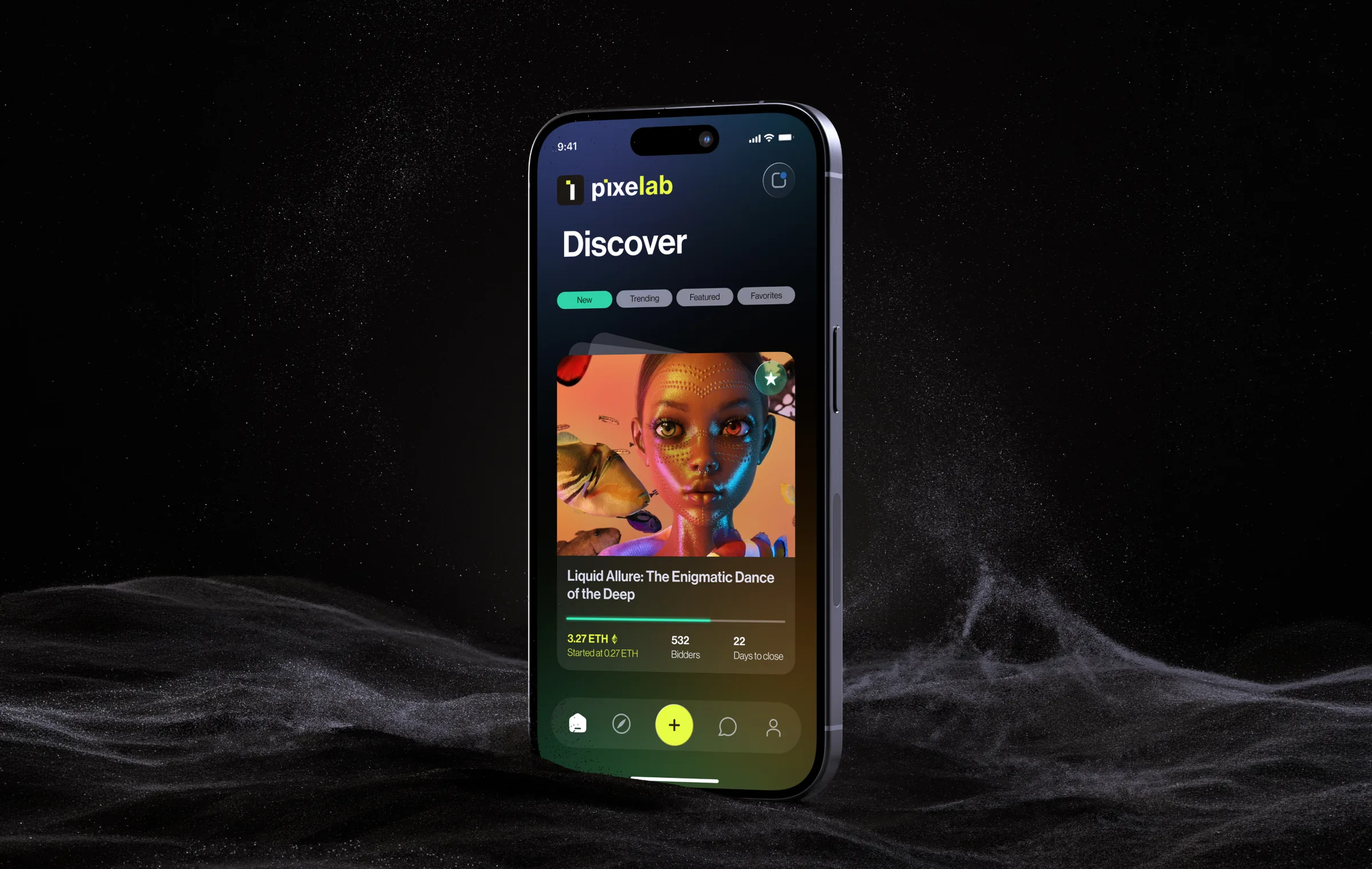
Pixelab is a concept mobile platform exploring how creators can build, share, and monetize digital work within a unified ecosystem. The project focused on designing an immersive mobile experience that combines discovery, creator profiles, digital collectibles, and social interaction through a bold visual identity and carefully structured user journeys.
Pixelab is a concept mobile platform exploring how creators can build, share, and monetize digital work within a unified ecosystem. The project focused on designing an immersive mobile experience that combines discovery, creator profiles, digital collectibles, and social interaction through a bold visual identity and carefully structured user journeys.

Impact & Context
Impact & Context
The Impact
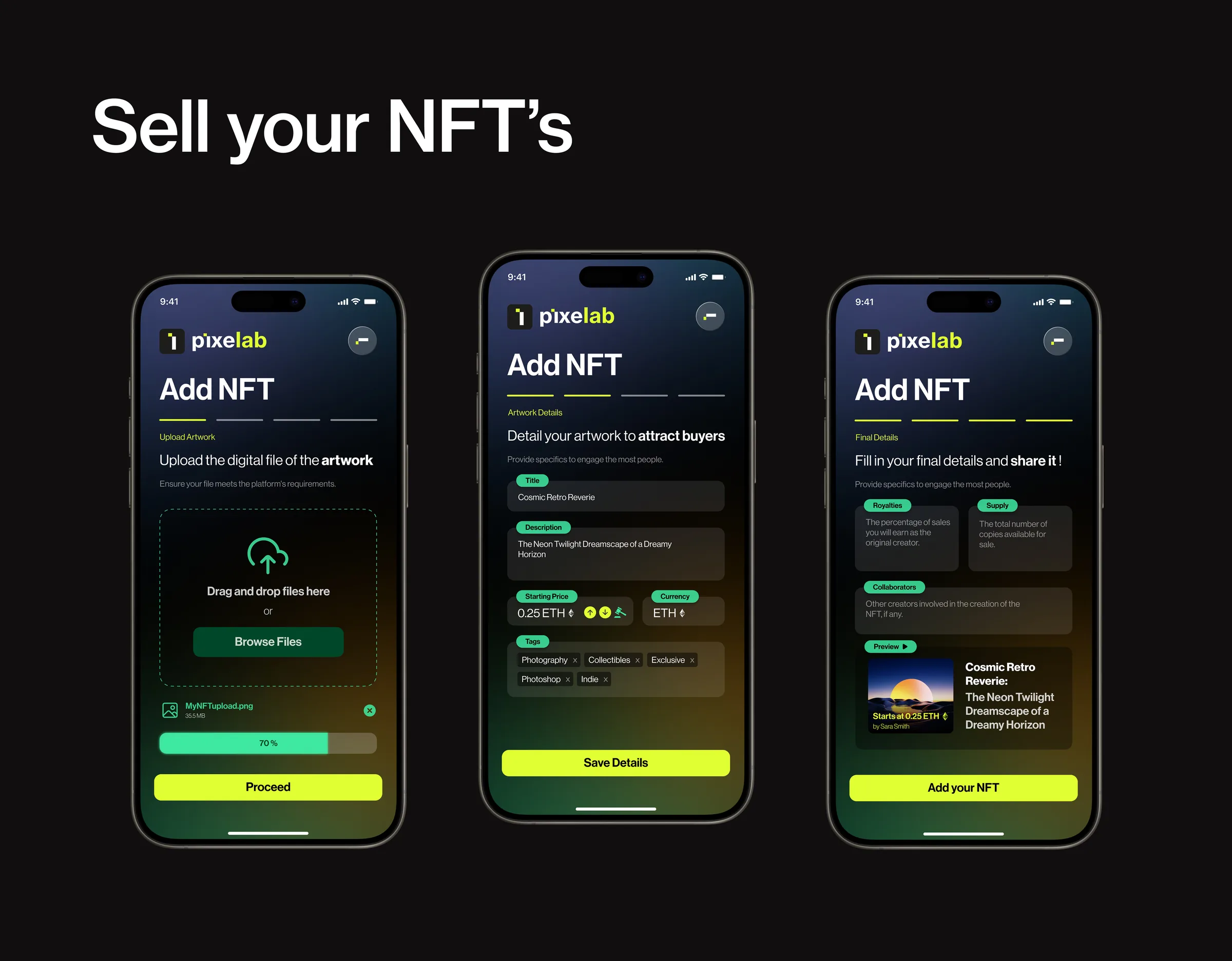
As the sole product designer on a two-person team, I took Pixelab from a one-line concept, a mobile platform for discovering, trading and investing in digital collectibles, through a complete four-stage design process: conceptualization, research, functionality and design, delivering a full product concept spanning onboarding, discovery, NFT creation, messaging, profile and a documented component system.
As the sole product designer on a two-person team, I took Pixelab from a one-line concept, a mobile platform for discovering, trading and investing in digital collectibles, through a complete four-stage design process: conceptualization, research, functionality and design, delivering a full product concept spanning onboarding, discovery, NFT creation, messaging, profile and a documented component system.
Highlights
End-to-end design process: Ran a full four-stage methodology, conceptualization, research, functionality, design, on a concept with no existing product to reference.
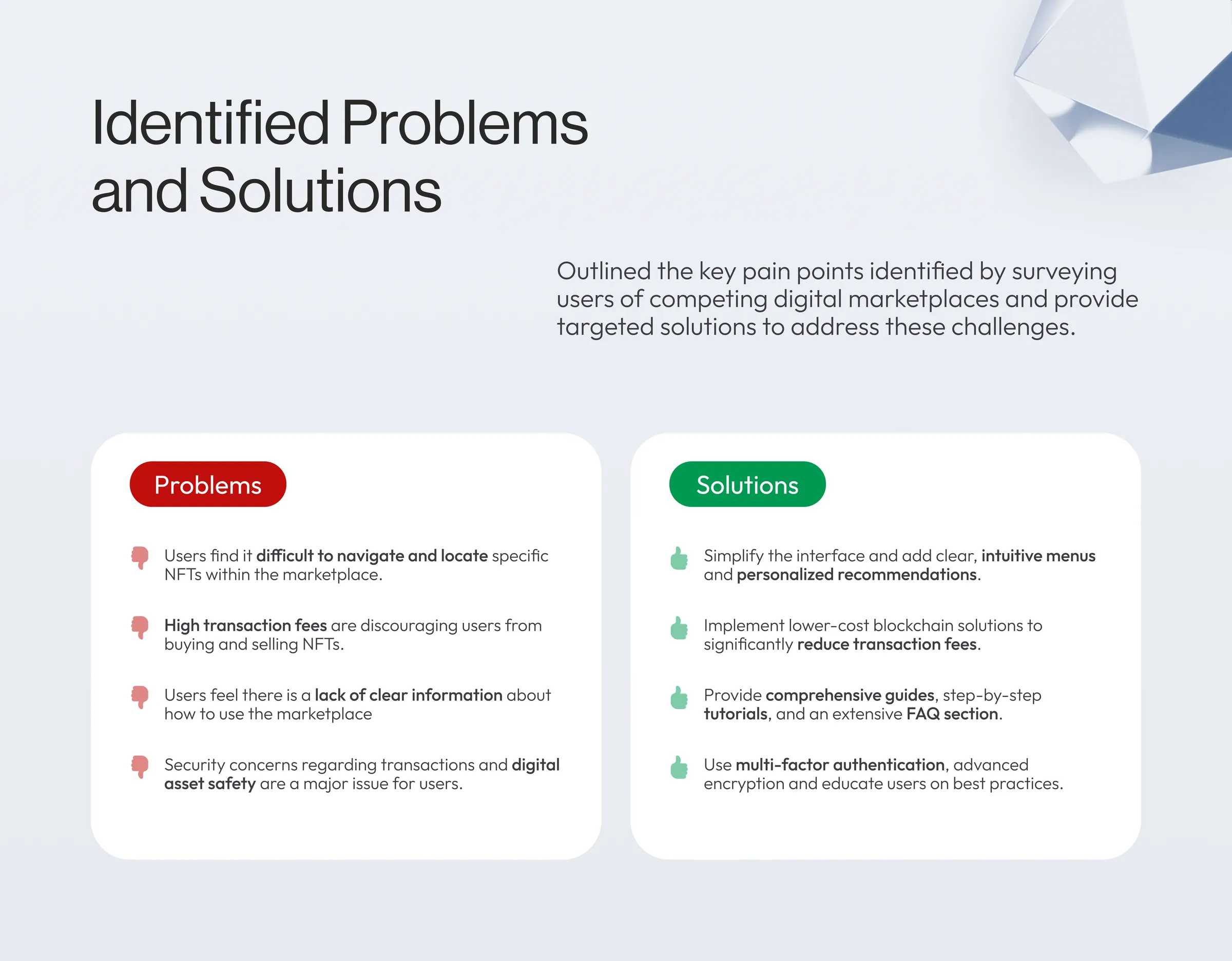
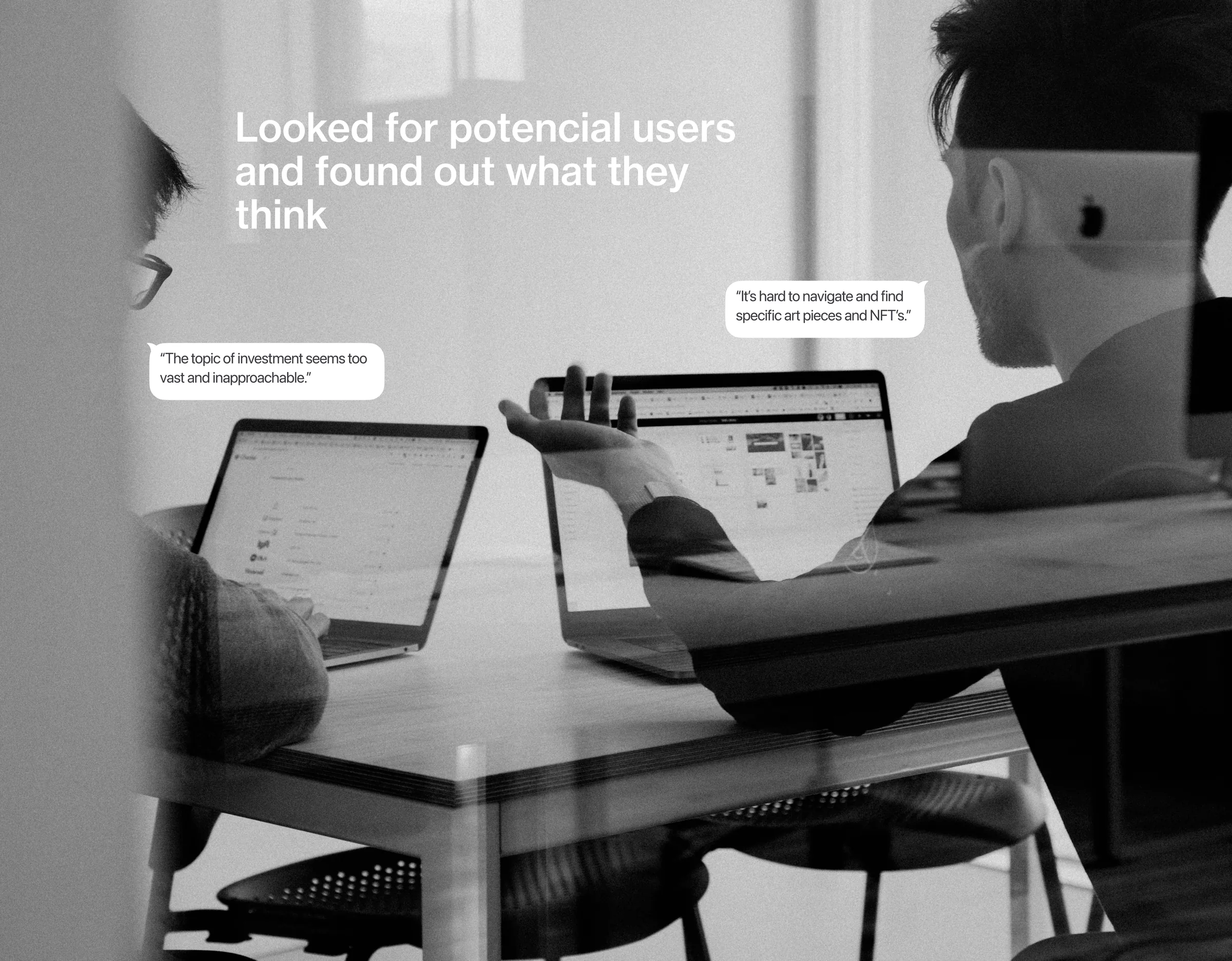
Research-grounded, not assumption-led: Surveyed pain points from real competing NFT marketplaces (navigation, high fees, unclear information, security) and mapped each one to a specific product solution before any screen was designed.
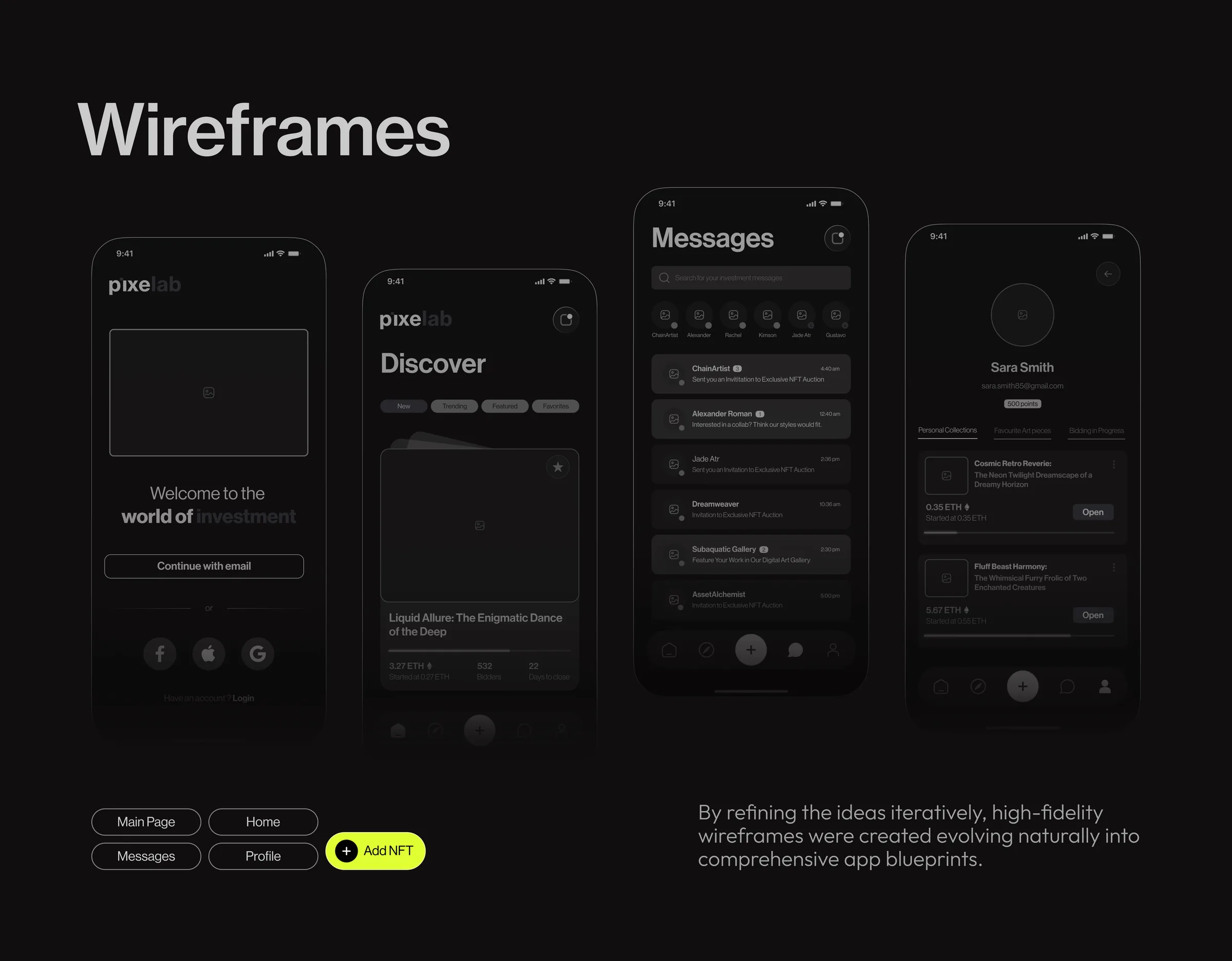
Full user flow before a single screen: Mapped the complete user flow, onboarding through NFT bidding, publishing, messaging and profile management, before moving into wireframes.
35+ screens, one component system: Delivered a documented, reusable component library, buttons, cards, states, navigation, that scaled consistently across 35+ screens.
End-to-end design process: Ran a full four-stage methodology, conceptualization, research, functionality, design, on a concept with no existing product to reference.
Research-grounded, not assumption-led: Surveyed pain points from real competing NFT marketplaces (navigation, high fees, unclear information, security) and mapped each one to a specific product solution before any screen was designed.
Full user flow before a single screen: Mapped the complete user flow, onboarding through NFT bidding, publishing, messaging and profile management, before moving into wireframes.
35+ screens, one component system: Delivered a documented, reusable component library, buttons, cards, states, navigation, that scaled consistently across 35+ screens.

Design Challenge
Design Challenge
Pixelab had no existing product to design against, no legacy interface, no user base, no data. The only brief was a concept: a mobile platform where creators could discover, trade and invest in digital collectibles. Before designing a single screen, I needed to understand a market defined by real, well-documented user frustration, competing NFT marketplaces were hard to navigate, charged high transaction fees, gave unclear information, and left users worried about the safety of their assets. The challenge was proving out a full product concept, from naming and brand through a working user flow to a scalable UI, treating a concept project with the same rigour as a live product.
Pixelab had no existing product to design against, no legacy interface, no user base, no data. The only brief was a concept: a mobile platform where creators could discover, trade and invest in digital collectibles. Before designing a single screen, I needed to understand a market defined by real, well-documented user frustration, competing NFT marketplaces were hard to navigate, charged high transaction fees, gave unclear information, and left users worried about the safety of their assets. The challenge was proving out a full product concept, from naming and brand through a working user flow to a scalable UI, treating a concept project with the same rigour as a live product.
The Result
The Result
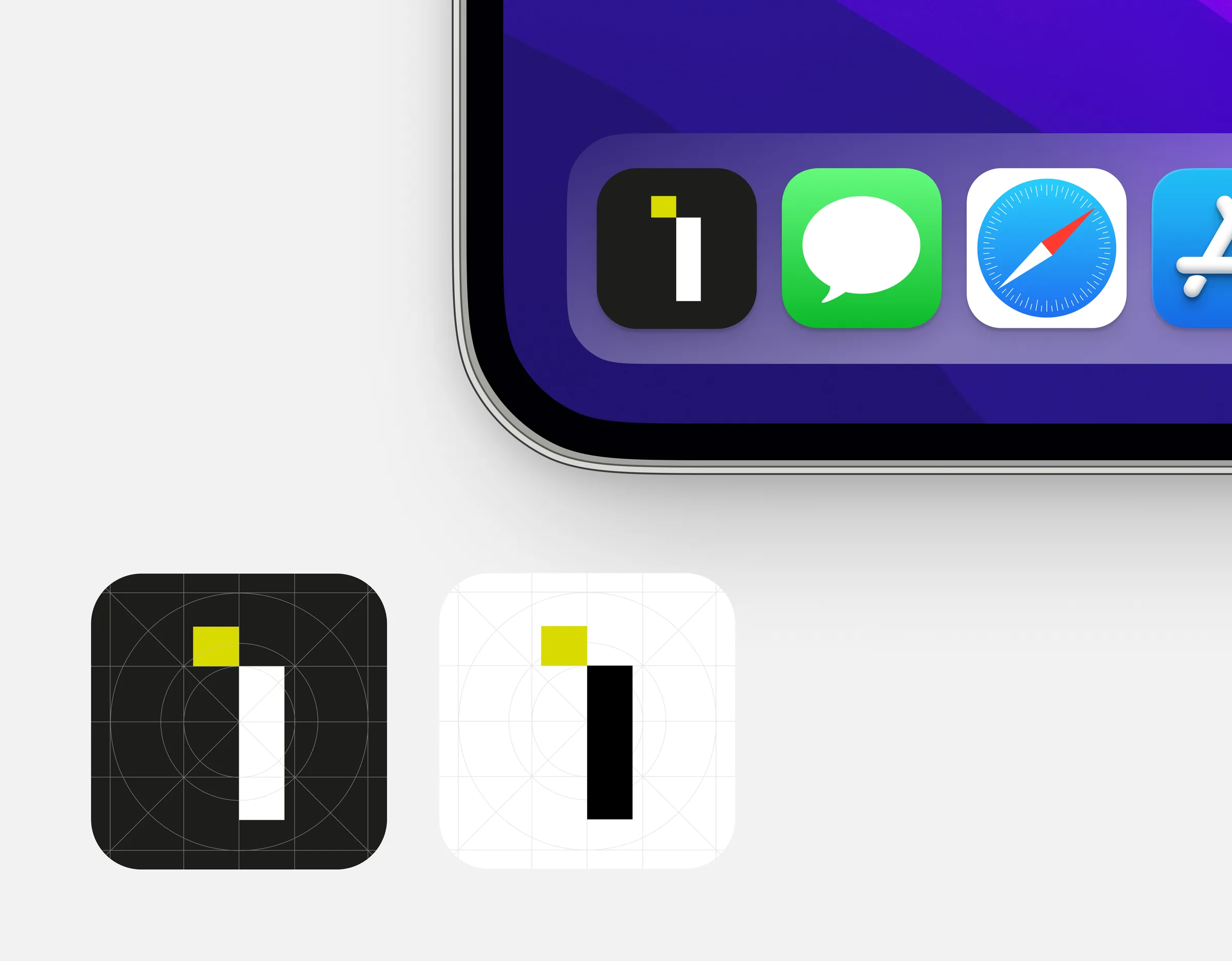
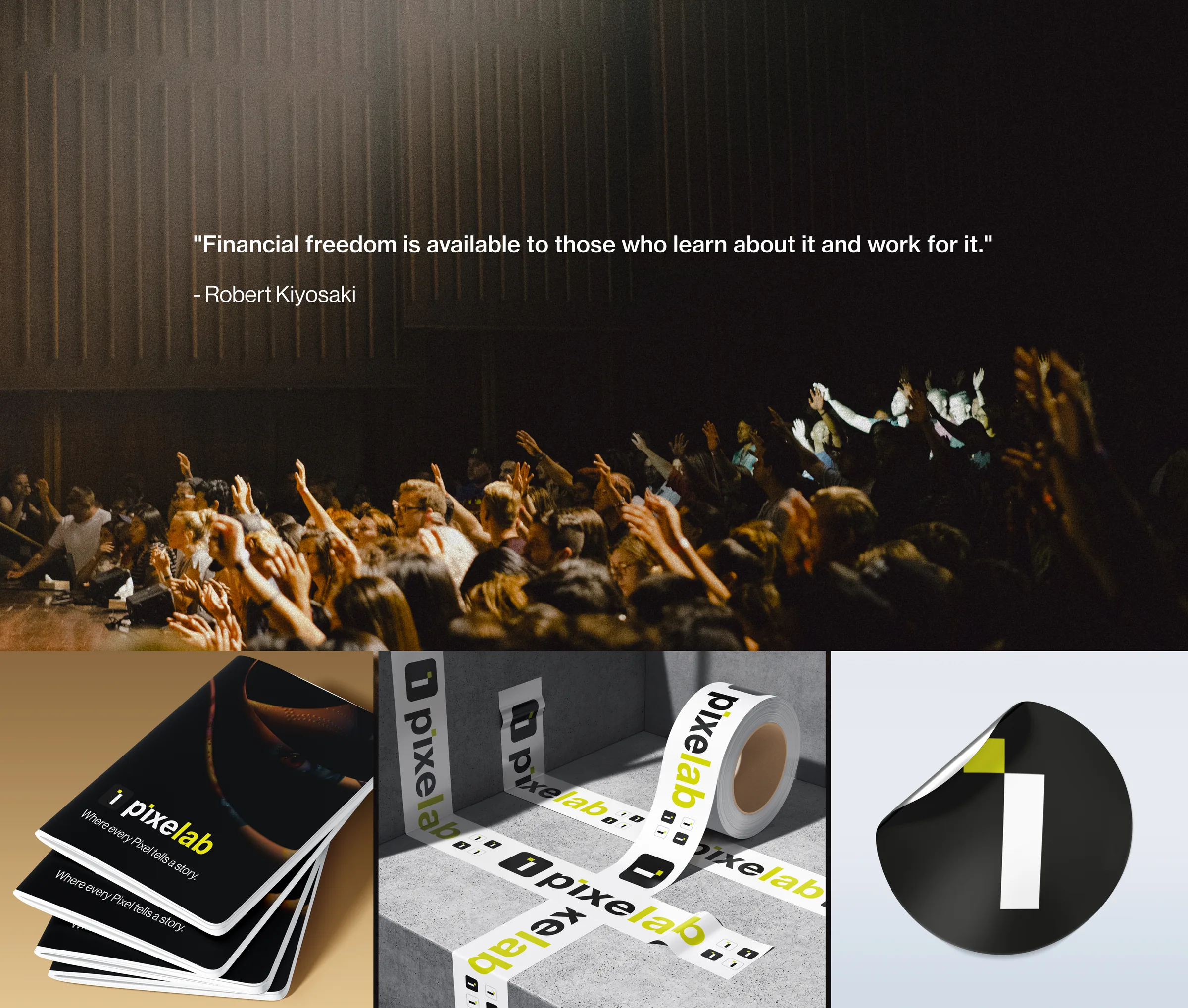
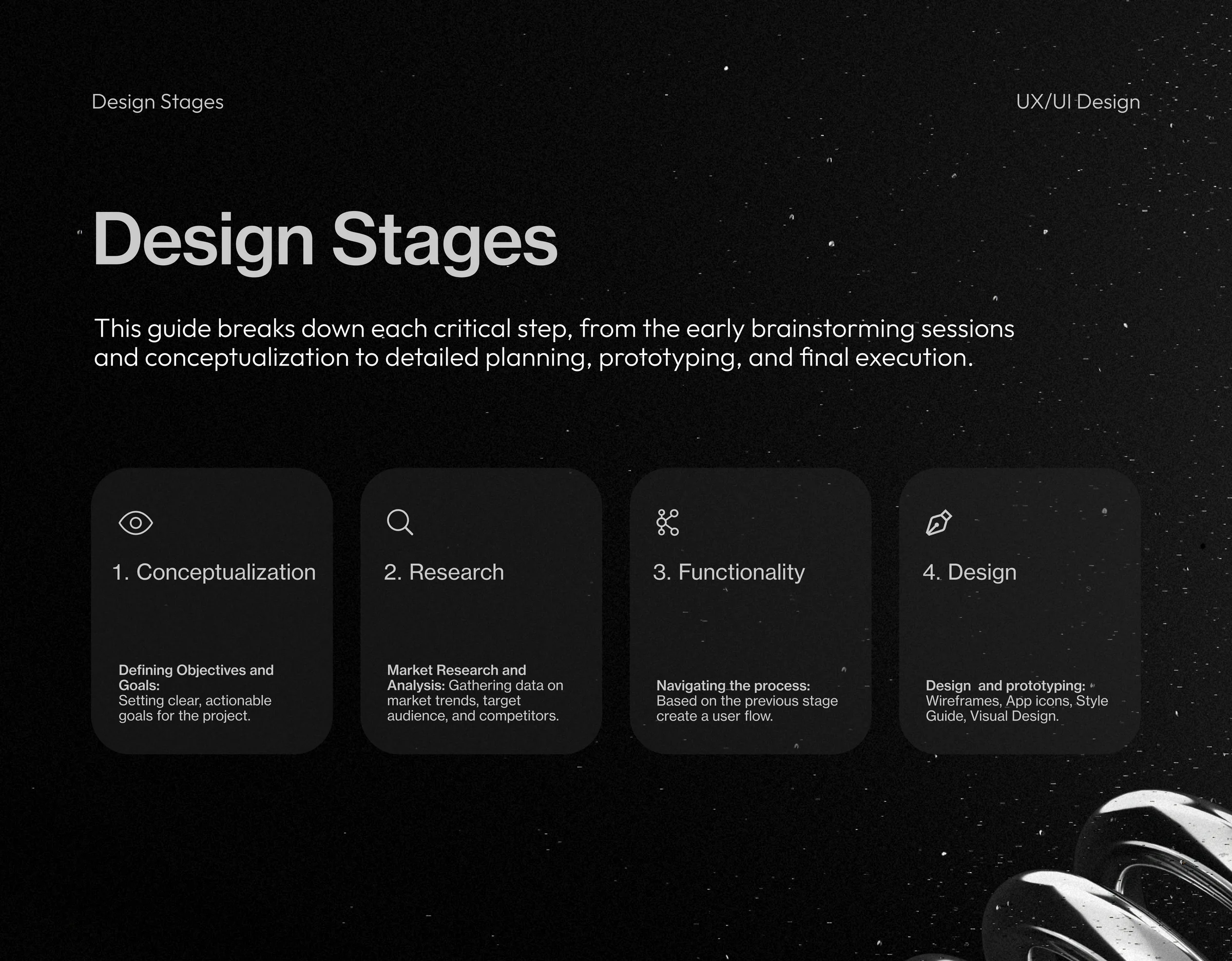
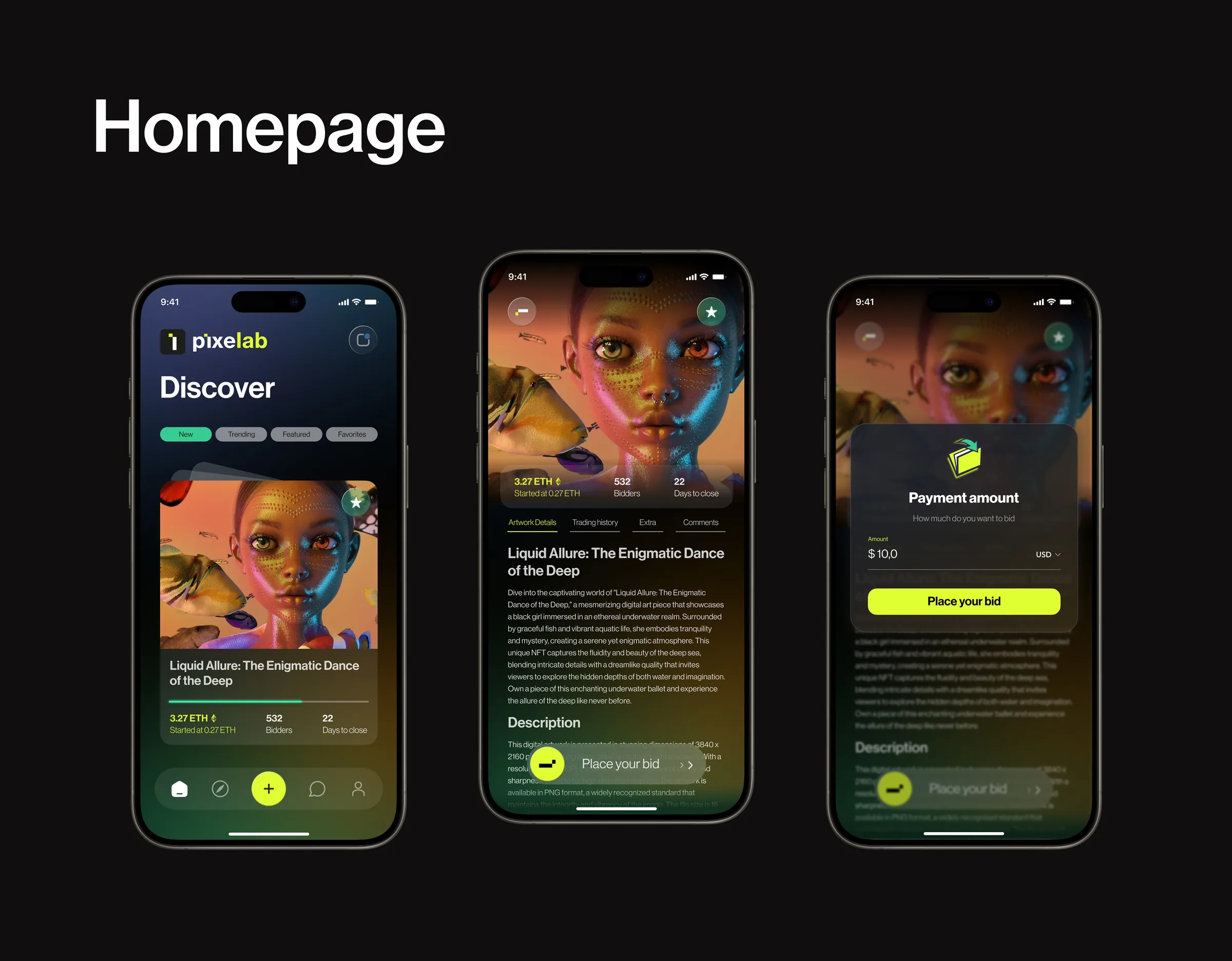
I ran the concept through four defined stages: conceptualization, defining clear objectives and the Pixelab name and brand itself, chosen deliberately to signal trust and quality; research, surveying real user pain points across competing digital marketplaces and pairing each one with a targeted solution; functionality, mapping the complete user flow from onboarding through discovery, bidding, publishing and messaging; and design, translating that flow into high-fidelity wireframes, an app icon system, and a documented component library. The result was a complete product concept spanning 35+ screens across onboarding, creator discovery, profile management, authentication and marketplace flows, extended into a full brand identity and merchandise system.
I ran the concept through four defined stages: conceptualization, defining clear objectives and the Pixelab name and brand itself, chosen deliberately to signal trust and quality; research, surveying real user pain points across competing digital marketplaces and pairing each one with a targeted solution; functionality, mapping the complete user flow from onboarding through discovery, bidding, publishing and messaging; and design, translating that flow into high-fidelity wireframes, an app icon system, and a documented component library. The result was a complete product concept spanning 35+ screens across onboarding, creator discovery, profile management, authentication and marketplace flows, extended into a full brand identity and merchandise system.



Personal Reflection
Personal Reflection
Pixelab gave me the chance to run a project the way I'd want to run any product from day one, treating a concept with the same process discipline as a live client engagement instead of jumping straight to screens. Surveying real pain points from competing NFT marketplaces before designing anything meant every decision, from simplifying navigation to building trust signals around security, was answering a problem someone had actually reported, not one I assumed existed. Mapping the full user flow before touching a single wireframe, then building a reusable component system instead of one-off screens, taught me how much a scalable foundation changes the pace and consistency of a 35+ screen product. It's the project that shaped how I still start every design process today: conceptualization, research, functionality, design, in that order, every time.
Pixelab gave me the chance to run a project the way I'd want to run any product from day one, treating a concept with the same process discipline as a live client engagement instead of jumping straight to screens. Surveying real pain points from competing NFT marketplaces before designing anything meant every decision, from simplifying navigation to building trust signals around security, was answering a problem someone had actually reported, not one I assumed existed. Mapping the full user flow before touching a single wireframe, then building a reusable component system instead of one-off screens, taught me how much a scalable foundation changes the pace and consistency of a 35+ screen product. It's the project that shaped how I still start every design process today: conceptualization, research, functionality, design, in that order, every time.
Product Vision & Next Steps
Product Vision &
Next Steps
As a concept project, Pixelab's natural next step would be validating the design against real users, usability testing the bidding and publishing flows in particular, before any of it reached production. The four-stage process, and the component system it produced, is the part of this project that outlived the concept itself, it's the same structured approach I carry into every client engagement since.
As a concept project, Pixelab's natural next step would be validating the design against real users, usability testing the bidding and publishing flows in particular, before any of it reached production. The four-stage process, and the component system it produced, is the part of this project that outlived the concept itself, it's the same structured approach I carry into every client engagement since.


